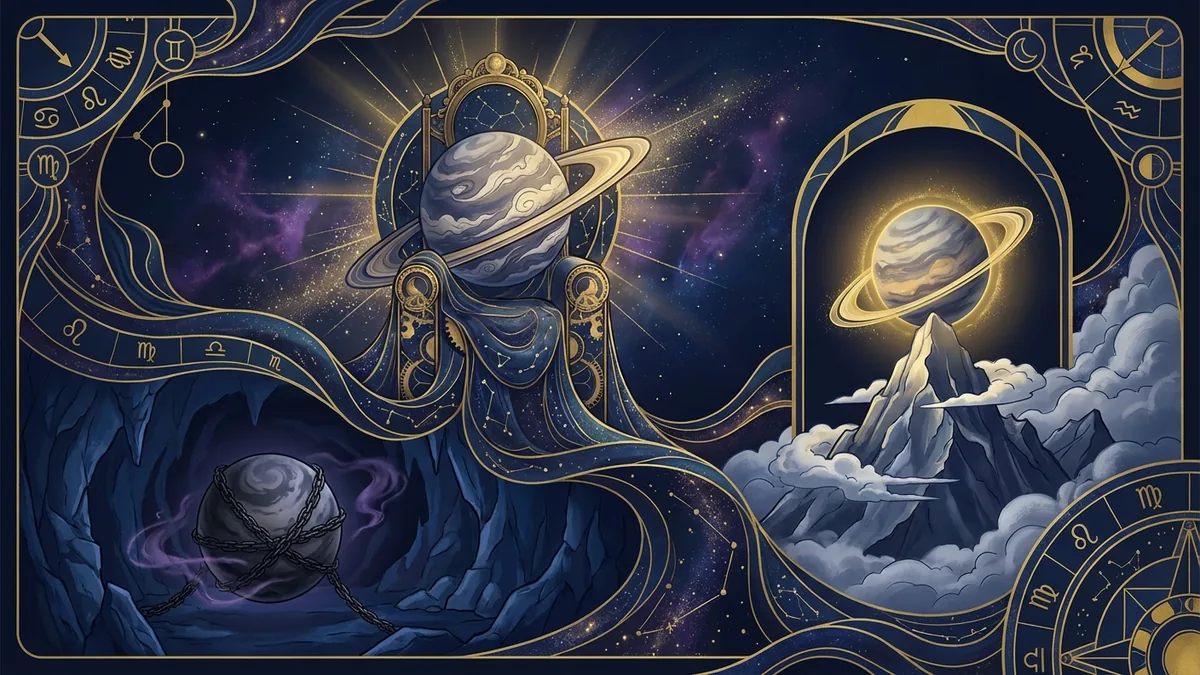
What Is Planetary Dignity?
Planetary dignity is one of the oldest and most fundamental concepts in traditional astrology, describing the relationship between a planet and the zodiac sign it occupies. Think of it as measuring how comfortable and effective a planet is in expressing its nature through a particular sign. A planet in dignity operates from a position of strength, able to manifest its qualities clearly and purposefully, while a planet lacking dignity may struggle, compensate, or express itself in more complicated ways.
The system of planetary dignities emerged from Hellenistic astrology over two thousand years ago and remains essential for chart interpretation today. Rather than labeling placements as simply "good" or "bad," dignities offer a nuanced language for understanding how planetary energies function. A planet in dignity has the resources it needs—like a skilled craftsperson working with quality tools in a well-lit workshop. A planet without dignity must work harder, improvise, or find creative workarounds to accomplish its goals.
Understanding planetary dignity transforms how you read a birth chart. Instead of seeing Mars in Cancer as merely "difficult," you recognize that Mars must express its assertive, direct nature through Cancer's emotional, protective, and indirect approach—a genuine challenge requiring adaptation. This framework helps astrologers assess the relative ease or difficulty planets face in fulfilling their roles within a person's life.
How It Works
The traditional system recognizes five levels of dignity and debility. The two major dignities are domicile (also called rulership) and exaltation. Domicile occurs when a planet occupies the sign it rules—the sign it has natural affinity with and authority over. The Sun rules Leo, the Moon rules Cancer, Mercury rules Gemini and Virgo, Venus rules Taurus and Libra, Mars rules Aries and Scorpio, Jupiter rules Sagittarius and Pisces, and Saturn rules Capricorn and Aquarius. In domicile, a planet operates at full strength, expressing its nature without impediment. The Sun in Leo shines with natural confidence and creative self-expression; Venus in Taurus easily accesses sensual pleasure and material stability.
Exaltation represents a planet's second-strongest position, where it functions with particular effectiveness though in a different way than domicile. Each planet has one sign of exaltation: Sun in Aries, Moon in Taurus, Mercury in Virgo, Venus in Pisces, Mars in Capricorn, Jupiter in Cancer, Saturn in Libra. In exaltation, a planet's highest qualities are honored and elevated. Mars in Capricorn, for instance, channels its warrior energy into disciplined ambition and strategic action rather than raw combativeness. The planet operates as a distinguished guest, respected and empowered, though not quite at home.
The two major debilities mirror these dignities: detriment and fall. A planet in detriment occupies the sign opposite its domicile—its rulership. Venus in Aries and Scorpio, Mercury in Sagittarius and Pisces, Mars in Libra and Taurus all exemplify detriment. Here, the planet must function in an environment fundamentally at odds with its nature. Venus in Aries must pursue harmony and relationship through assertive, independent, sometimes aggressive means—possible but requiring significant adaptation. The planet isn't broken, but it lacks easy access to its natural resources.
Fall occurs in the sign opposite a planet's exaltation and represents the most challenging placement. Sun in Libra, Moon in Scorpio, Mercury in Pisces, Venus in Virgo, Mars in Cancer, Jupiter in Capricorn, Saturn in Aries—these positions require the planet to operate against its grain. Mars in Cancer must assert itself through emotional sensitivity and protective instincts rather than direct action. This doesn't doom the planet to failure, but it does indicate that the person must develop conscious strategies to work with this energy effectively. Traditional astrology also recognizes minor dignities—triplicity, term, and face—which add further nuance, but the major dignities provide the essential framework for assessment.
Examples in Action
Consider two people with Moon placements at opposite ends of the dignity spectrum. Someone with Moon in Cancer (domicile) typically finds emotional expression natural and instinctive. Their needs for security, nurturing, and emotional connection align seamlessly with their ability to create safe spaces and respond empathetically to others. They might naturally gravitate toward caregiving roles or create a deeply comfortable home environment without overthinking it. Their emotional radar works clearly, and they trust their feelings as reliable guides. This doesn't guarantee happiness—life circumstances still matter—but the Moon functions smoothly in its home sign.
In contrast, someone with Moon in Capricorn (detriment) faces a different emotional landscape. The Moon seeks comfort, vulnerability, and emotional flow, but Capricorn emphasizes structure, control, and emotional restraint. This person may feel their emotions deeply but struggle to express them, or they might intellectualize feelings rather than simply experiencing them. They often learned early that emotions needed management rather than free expression. However, this placement can develop into a strength: emotional maturity, the ability to remain steady during crises, and skill at building security through practical means rather than emotional dependence. The Moon in Capricorn must work harder, but it can achieve profound emotional wisdom through that effort.
Another illuminating example involves Mercury in Virgo (both domicile and exaltation) versus Mercury in Pisces (detriment and fall). Mercury in Virgo excels at analysis, detail-orientation, and practical communication. These individuals naturally organize information, spot errors, and communicate with precision. Mercury in Pisces, however, must think through intuition, symbolism, and emotional resonance rather than logic and facts. While this can create challenges in traditional educational settings or technical fields, it can produce remarkable creative, spiritual, or artistic thinking. The poet or mystic with Mercury in Pisces may struggle with tax forms but access imaginative and empathic communication that Mercury in Virgo cannot easily reach. Dignity describes ease of function, not ultimate value or potential.