Aspects & Patterns

What Is a Stellium? When 3+ Planets Crowd One Sign or House

stellium astrology stellium meaning stellium birth chart planet cluster
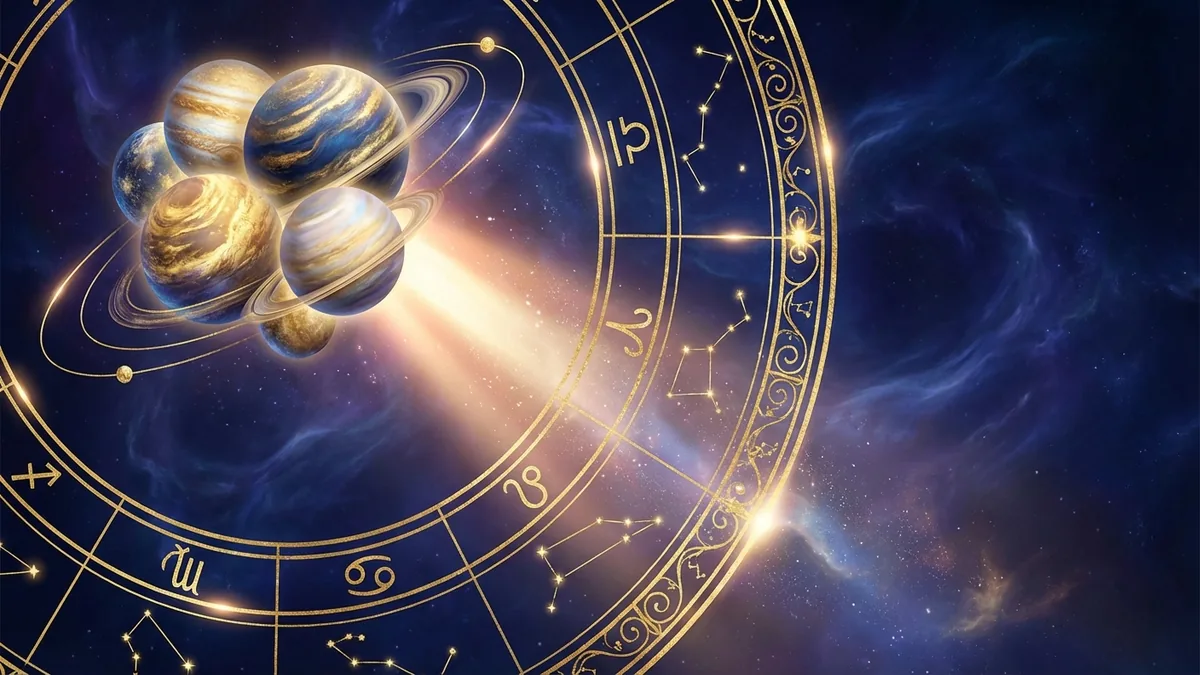
Stellium - astrology illustration

What Is Stellium?

When three or more planets gather in the same zodiac sign or house in a birth chart, astrologers call this concentration a stellium. Think of it as a cosmic spotlight—a focal point where multiple planetary energies converge and amplify each other. Rather than spreading your psychological resources across twelve different areas of life, a stellium directs tremendous attention, talent, and sometimes struggle toward one specific theme or domain.

Stelliums represent some of the most significant patterns an astrologer looks for when interpreting a chart. They create individuals who often feel driven, even compelled, toward particular interests or life areas. Someone with a stellium rarely approaches that part of their life casually. Whether it manifests as exceptional talent, obsessive focus, or a lifelong challenge to master, a stellium marks territory that simply cannot be ignored.

The intensity of a stellium comes from planetary synergy. Each planet retains its individual nature, but their proximity creates a blended energy that's greater than the sum of its parts. This concentration can feel like both a superpower and a burden—extraordinary focus in one area often means less attention available for others, creating a life that's deeply textured in some dimensions while potentially underdeveloped in others.

How It Works

To understand how a stellium operates, you need to grasp three layers: the planets involved, the sign they occupy, and the house where they cluster. Each layer adds meaning. The planets represent different psychological functions—Mercury governs communication and thinking, Venus relates to values and relationships, Mars drives action and desire. When these functions operate in the same sign, they speak the same language and share the same style. A Mercury-Venus-Mars stellium in Gemini, for instance, would think, love, and act with Gemini's curiosity, versatility, and need for mental stimulation.

The sign provides the flavor and method of expression. A stellium in a water sign like Cancer processes everything through emotion and intuition, while the same planets in an air sign like Aquarius would intellectualize and detach. The sign's element, modality, and ruling planet all color how those planetary functions manifest. This is why two people with stelliums involving the same planets can seem remarkably different if those stelliums fall in different signs—one might be introspective and sensitive, the other analytical and socially oriented.

The house placement reveals the life area where this concentrated energy plays out. A stellium in the tenth house focuses on career, public reputation, and achievement regardless of which sign it occupies. The same planetary combination in the fourth house would direct that intensity toward home, family, and emotional foundations. House placement often determines whether a stellium's energy finds public expression or remains more private and internal.

Not all astrologers agree on the exact definition of a stellium. The traditional requirement is three or more planets in the same sign or house, but some astrologers specify that the Sun or Moon must be included, while others argue that only the traditional seven planets should count, excluding modern planets like Uranus, Neptune, and Pluto. Most contemporary astrologers take a more inclusive approach, counting any three or more planets, though they might weigh stelliums containing luminaries or personal planets more heavily than those composed entirely of outer planets.

Examples in Action

Consider someone born with Mercury, Venus, Mars, and Jupiter all in Scorpio in the eighth house. This person would naturally gravitate toward Scorpio themes—psychology, hidden truths, transformation, sexuality, shared resources. Their thinking (Mercury) probes beneath surfaces. Their values and attractions (Venus) draw them to intensity and emotional authenticity. Their drive (Mars) pushes them to confront what others avoid. Jupiter expands this whole pattern, perhaps leading them to study psychology professionally, work in finance managing other people's money, or become someone others turn to during crisis. This stellium doesn't just suggest interest in these areas—it creates someone who cannot help but engage with them deeply.

A different example: Sun, Moon, Mercury, and Saturn in Capricorn in the second house. Here we see someone whose identity, emotional nature, communication style, and sense of discipline all align with Capricorn's pragmatism, ambition, and respect for structure. The second house placement channels this toward building material security and establishing self-worth through tangible achievement. This person likely started thinking about financial stability young, perhaps taking on responsibility early. They measure their value through what they produce and accumulate. The Saturn involvement adds both discipline and potential anxiety around worthiness and resources.

Historical figures often display prominent stelliums. Astrologers have noted that many artists, innovators, and public figures who revolutionized specific fields had stelliums in the relevant houses or signs. Someone with a fifth-house stellium might show exceptional creative output. A ninth-house stellium often appears in the charts of philosophers, travelers, and teachers who devote themselves to expanding human understanding. The stellium doesn't guarantee success, but it does guarantee that the person will pour tremendous energy into that domain, for better or worse.

Understanding stellium is the first step. The next step is seeing how it shows up in your chart.

Get Your Free Cosmic Blueprint

Practical Tips

If you have a stellium in your chart, your first task is understanding where your energy naturally concentrates so you can work with it rather than against it. Identify the sign, house, and planets involved, then ask yourself how this pattern has already manifested in your life. Chances are you'll recognize it immediately—stelliums rarely hide. You might notice that you've always been drawn to certain topics, that you have disproportionate experience in one life area, or that you struggle with balance because so much of your identity clusters around one theme.

The challenge with stelliums is managing intensity without burning out or becoming one-dimensional. Because so much energy flows toward one area, other parts of life can feel neglected or underdeveloped. Someone with a seventh-house stellium might be exceptionally skilled at relationships but struggle with independent identity. A tenth-house stellium person might achieve career success while their private life remains sparse. Conscious integration means honoring your stellium's focus while deliberately cultivating the opposite house or complementary areas. If your stellium sits in Aries, spend time with Libran qualities—cooperation, diplomacy, consideration of others.

For those without stelliums, understanding them helps you recognize these patterns in others. When someone seems unusually focused, talented, or even obsessive about a particular life domain, check their chart for a stellium. This knowledge builds compassion—what might look like imbalance or fixation is actually their natural wiring. Stellium people often need to funnel their energy toward their focal point before they can relax or attend to other matters. Trying to force them toward balance prematurely usually backfires.

Common Misconceptions

Misconception: A stellium automatically means talent or success in that area. While stelliums do indicate concentrated energy and focus, they don't guarantee positive outcomes. A stellium can manifest as struggle, compulsion, or repeated challenges just as easily as exceptional ability. Someone with a twelfth-house stellium might deal with chronic isolation or unconscious patterns rather than spiritual mastery. The intensity is neutral—what matters is how consciously the person works with it. Stelliums show where you cannot avoid engagement, not where you'll automatically excel.

Misconception: Stelliums are rare and special. Stelliums are actually fairly common. With ten or more celestial bodies used in modern astrology, having three cluster in one sign or house happens frequently. What varies is the composition—a stellium containing the Sun, Moon, and chart ruler carries different weight than one composed of three outer planets. The presence of a stellium doesn't make someone exceptional, though it does create a distinctive psychological pattern that shapes how they experience and approach life.

Misconception: You must express all planets in a stellium equally. Planets within a stellium interact, but they don't demand equal attention. Often one planet emerges as the leader or focal point, especially if it rules the sign, is most closely conjunct others, or holds special dignity. The other planets support and modify the dominant theme. Trying to give each planet separate expression can fragment the stellium's natural coherence. Instead, look for how they blend into a unified drive or approach, with some planets serving more as background influence than foreground actors.

Key Takeaways

Understanding your stellium—or lack thereof—is fundamentally about understanding where life asks you to concentrate. If you have a stellium, you're being called to develop depth rather than breadth, to become someone who knows one territory intimately rather than surveying many superficially. This isn't better or worse than a more distributed chart; it's simply your path. The wisdom lies in accepting this concentration, working skillfully with the intensity, and finding ways to prevent that focused energy from creating blind spots elsewhere in your life.

Whether you're interpreting your own chart or someone else's, approach stelliums with respect for their power. These planetary clusters represent core patterns that have likely been operating since early life, shaping identity, interests, and challenges in fundamental ways. Rather than trying to fix or balance them away, the goal is conscious integration—understanding the stellium deeply enough that you can channel its intensity purposefully while remaining aware of the perspectives and life areas it might eclipse. That awareness itself creates the possibility for wholeness, even within a naturally concentrated chart.

Frequently Asked Questions

A stellium is a concentration of three or more planets in the same zodiac sign or house in your birth chart. This planet cluster creates an intense focus of energy in that particular area of your life or personality trait. Some astrologers require four planets for a stellium, but the most common definition is three or more. The planets involved amplify each other's influence, making that sign or house theme especially prominent in your life.

A stellium acts as a major focal point in your birth chart, concentrating your energy and attention in one specific area. The sign containing the stellium strongly influences your personality, often more than your sun sign alone. You'll likely notice recurring themes related to that sign's qualities throughout your life experiences. This concentration of planetary energy can make you particularly skilled or challenged in the areas governed by that sign or house.

A stellium is significant because it's relatively uncommon and creates an unmistakable emphasis in your astrological makeup. This planet cluster means you're dealing with multiple planetary energies working together in one area, which can manifest as exceptional talent, intense focus, or concentrated life lessons. People with stelliums often feel a strong pull toward the themes of that sign or house. The stellium essentially becomes a defining feature of your personality and life path.

Stelliums are not extremely rare, but they're not common either—roughly 20-30% of people have one in their birth chart. The rarity depends on the specific planetary combinations and which sign or house they occupy. Stelliums involving slower-moving outer planets are more common since those planets travel together for longer periods. Having a stellium in a less common sign or with widely varied planets is more unusual and noteworthy.

A stellium in a specific house means that area of life receives extraordinary focus and importance for you. For example, a stellium in the 10th house emphasizes career and public reputation, while one in the 7th house focuses on relationships and partnerships. You'll likely spend considerable time, energy, and attention on matters related to that house throughout your life. The sign containing the stellium colors how you approach these life areas, while the house shows where the energy manifests.

Your Weekly Cosmic Playbook

Every Sunday: personalized transit forecast, power days, and practical guidance for the week ahead.

Free every Sunday. Unsubscribe anytime.

Welcome to Your Cosmic Playbook!

Your personalized weekly forecast arrives every Sunday at 6 PM in your timezone.

Don't see it? Check your spam folder and add us to contacts!

CosmicGuide AI

Reviewed by CosmicGuide AI Astrologers

Forecasts are reviewed by professional astrologers with 15+ years of experience in natal and predictive astrology.

About our editorial process

More in Aspects & Patterns

Related Concepts