Astrology Basics

What Is a Birth Chart? Your Complete Guide to Natal Charts

birth chart natal chart astrology chart birth chart meaning
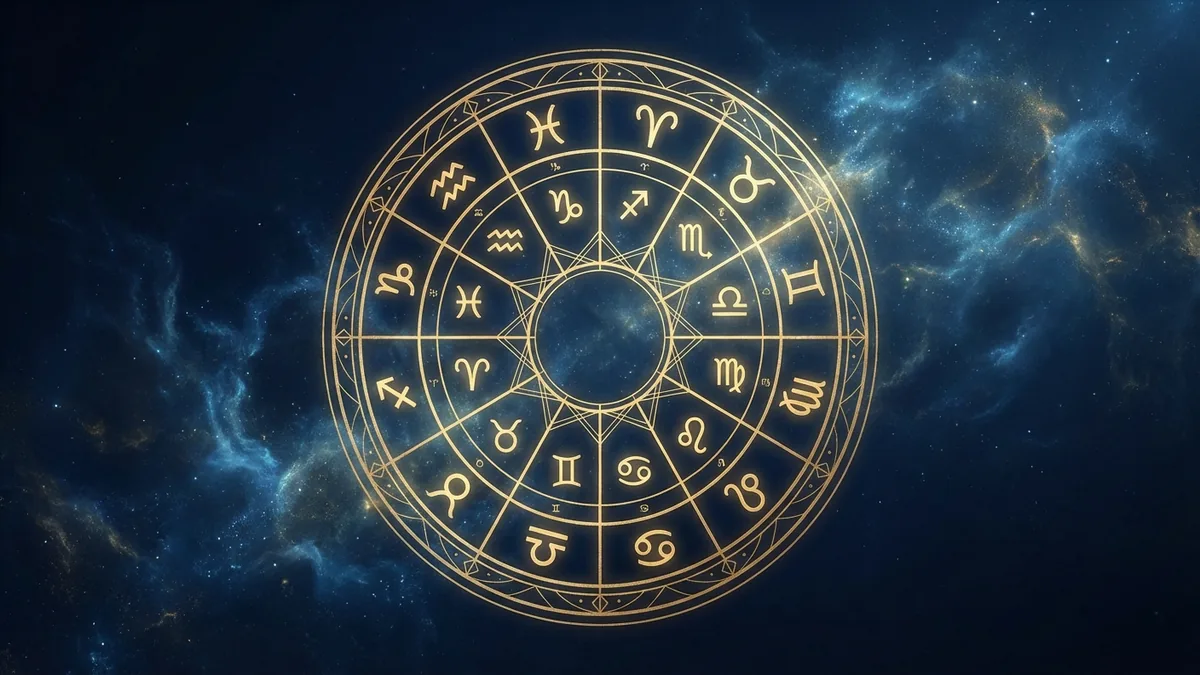
Birth Chart - astrology illustration

What Is Birth Chart?

A birth chart, also called a natal chart or astrology chart, is a map of where all the planets were in their journey around the Sun at the exact moment you were born, from the vantage point of your birthplace. Think of it as a cosmic snapshot—a frozen moment in time that captures the precise arrangement of celestial bodies as you took your first breath. This chart forms the foundation of everything in astrology, serving as the blueprint astrologers use to understand personality, life patterns, and potential.

The birth chart matters because it moves astrology beyond the simplistic sun sign horoscopes most people know. While your sun sign (the zodiac sign the Sun occupied at your birth) is part of your chart, it's just one piece among many. Your chart includes the Moon, Mercury, Venus, Mars, Jupiter, Saturn, Uranus, Neptune, and Pluto, each positioned in a specific zodiac sign and area of the sky. This creates a complex, individualized portrait that explains why two people born under the same sun sign can be remarkably different.

Understanding your birth chart provides a framework for self-awareness that many find surprisingly accurate and useful. It doesn't predict your future in a deterministic way, but rather illuminates your inherent tendencies, strengths, challenges, and the kinds of experiences you're likely to encounter. Whether you approach it as psychological symbolism or cosmic influence, the birth chart offers a rich language for understanding human nature and individual differences.

How It Works

The mechanics of a birth chart begin with three essential pieces of information: your birth date, exact birth time, and birthplace. The date determines where the planets were in the zodiac. The time is crucial because it establishes the Ascendant (or Rising sign)—the zodiac sign that was rising on the eastern horizon at your birth moment—which rotates through all twelve signs approximately every two hours. Your birthplace matters because astrology is geocentric, calculated from Earth's perspective, and the sky looks different from different locations on our planet.

The chart itself is a 360-degree circle divided into twelve sections called houses, each representing different life areas: identity, resources, communication, home, creativity, health, partnerships, transformation, philosophy, career, community, and spirituality. The houses are determined by your birth time and location, which is why that information is so critical. The zodiac signs, meanwhile, are twelve equal 30-degree divisions of the sky based on the Sun's apparent annual path. Planets move through these signs at different speeds—the Moon changes signs every two to three days, while Pluto can remain in one sign for up to twenty years.

When astrologers interpret a birth chart, they're reading a symbolic language with multiple layers. Each planet represents a different psychological function or life drive: the Sun represents core identity and vitality, the Moon represents emotional needs and instincts, Mercury represents communication and thinking, Venus represents values and relationships, and so forth. The zodiac sign a planet occupies describes how that planetary energy expresses itself—Mars in Aries acts differently than Mars in Cancer, for instance. The house a planet occupies shows where in life that energy plays out most prominently.

Additionally, astrologers examine aspects—the angular relationships between planets. When two planets are 90 degrees apart (a square), 180 degrees apart (an opposition), or 120 degrees apart (a trine), for example, their energies interact in specific ways. These geometric relationships create the dynamic tension and harmony within a chart, showing internal conflicts, natural talents, and how different parts of your psyche work together or at cross-purposes. This multi-layered system—planets, signs, houses, and aspects—creates millions of possible combinations, which is why each birth chart is essentially unique.

Examples in Action

Consider someone born with the Sun in Leo in the tenth house. The Sun represents their core identity and life force, Leo suggests a warm, creative, and dignified expression of that identity, and the tenth house indicates that career, public reputation, and social contribution are central to their life story. This person likely feels most themselves when they're recognized for their work or making a visible contribution to society. Compare this to someone with Sun in Leo in the fourth house—they have the same solar warmth and creativity, but it's directed toward home life, family, and private emotional foundations rather than public achievement. Same sun sign, entirely different life focus.

For a more complex example, imagine a birth chart with Venus in Scorpio in the seventh house, square to Mars in Aquarius in the fourth house. Venus in Scorpio in the seventh house suggests someone who experiences relationships with great intensity and depth, seeking transformative emotional connections with partners. The square to Mars in Aquarius in the fourth house indicates tension between their relationship needs and their home life or family patterns—perhaps they come from a family that was emotionally detached or unconventional, creating friction with their desire for intimate merger. Mars in Aquarius suggests they assert themselves in independent, sometimes rebellious ways regarding domestic matters. This configuration might manifest as someone who struggles between their need for intense partnership and their need for personal freedom, particularly around issues of home and family.

A practical example many people relate to involves the Moon's placement. Someone with Moon in Gemini needs variety, conversation, and mental stimulation to feel emotionally secure, while someone with Moon in Taurus needs physical comfort, routine, and material stability. If the Gemini Moon person tries to follow advice meant for creating emotional security through routine and predictability, they'll likely feel restless and trapped. Understanding these differences through the birth chart helps explain why generic advice doesn't work for everyone—our emotional operating systems are fundamentally different.

Understanding birth chart is the first step. The next step is seeing how it shows up in your chart.

Get Your Free Cosmic Blueprint

Practical Tips

To work with your birth chart effectively, start by obtaining an accurate chart from a reliable source. You'll need your exact birth time, which you can usually find on your birth certificate or by requesting it from the hospital or vital records office where you were born. Even a difference of a few minutes can change your Rising sign or house placements, so accuracy matters. Once you have your chart, resist the urge to interpret everything at once. Begin with the Sun, Moon, and Rising sign—these three form the core of your astrological identity and give you the most immediately recognizable information about yourself.

As you study your chart, approach it as a symbolic language rather than a literal prediction. When you read that Saturn in your fourth house might indicate challenges with home and family, don't assume you're doomed to family problems. Instead, consider that you might need to work harder to create a sense of security, or that you take family responsibilities very seriously, or that you're building structures and boundaries around your private life. The chart shows inclinations and themes, not certainties. Keep a journal noting when you recognize chart patterns playing out in your life—this builds your understanding of how the symbolism translates to lived experience.

Consider consulting with a professional astrologer for your first in-depth reading. While learning to read your own chart is valuable, an experienced astrologer can identify patterns you might miss and offer perspective you can't achieve when you're inside your own life. They can also help you understand difficult placements constructively rather than fatalistically. As you deepen your knowledge, study transits—the current positions of planets and how they interact with your birth chart—to understand timing and cycles in your life. This transforms the birth chart from a static document into a living tool for navigation.

Common Misconceptions

Misconception: Your birth chart determines your fate and limits what you can become. This is perhaps the most damaging misunderstanding of natal astrology. Your birth chart describes inclinations, natural tendencies, and the psychological raw materials you're working with—not a fixed destiny. Someone with a challenging Saturn placement isn't doomed to depression or failure; they're being called to develop discipline, maturity, and resilience in specific life areas. The chart shows the weather patterns of your life, not a predetermined script. You still choose how to respond, what to develop, and where to direct your energy. Two people with similar charts can live very different lives based on consciousness, choice, and circumstance.

Misconception: Difficult aspects or placements are bad, and harmonious ones are good. In practice, the supposedly easy aspects like trines can make people complacent or lazy in those areas because things come too naturally. Meanwhile, challenging aspects like squares and oppositions often drive achievement, growth, and character development because they create internal tension that demands resolution. Many successful people have charts full of difficult aspects that pushed them to develop strengths they might otherwise have ignored. Astrology isn't about good or bad placements—it's about understanding your particular combination of ease and challenge, and learning to work with both.

Misconception: You need to know astrology to benefit from understanding your birth chart. While learning astrology deepens your understanding, you don't need to become an astrologer to gain insight from your chart. A single professional reading can provide years of valuable self-reflection material. Many people find that just understanding their Moon sign's emotional needs, or recognizing why their Rising sign makes their first impression different from their Sun sign personality, creates meaningful shifts in self-acceptance. The birth chart's value lies in the self-awareness it generates, not in technical astrological expertise. Think of it like understanding your personality type—you don't need to be a psychologist to benefit from knowing whether you're introverted or extroverted.

Key Takeaways

Your birth chart is ultimately a tool for self-understanding, not a limitation or excuse. The most valuable way to work with it is as a mirror that reflects back patterns you might not otherwise see clearly. When you recognize yourself in your chart—when you read about your Moon sign and think, 'Yes, that's exactly how I process emotions'—you're gaining the kind of self-knowledge that allows you to make more conscious choices. You can work with your natural inclinations rather than fighting against them or wondering why you're different from others.

Approach your birth chart with both openness and discernment. Let it illuminate your strengths so you can develop them more fully, and help you understand your challenges so you can address them more compassionately. But remember that you're always more than your chart—you have free will, consciousness, and the ability to grow beyond your initial tendencies. The birth chart shows where you're starting from and the themes you're here to work with, but the life you build with that foundation is ultimately your own creation. Use this ancient symbolic system as a guide for the journey of becoming more fully yourself.

Frequently Asked Questions

A birth chart, also called a natal chart or astrology chart, is a map of where all the planets were positioned in the sky at the exact moment and location of your birth. It's divided into 12 sections called houses, and shows which zodiac signs the planets were in at that time. Astrologers read this chart to understand your personality traits, strengths, challenges, and life patterns. Think of it as a cosmic snapshot that captures the unique astronomical conditions when you entered the world.

Your sun sign is only one piece of your complete birth chart, representing where the Sun was positioned at your birth. A full birth chart includes the positions of the Moon, Mercury, Venus, Mars, Jupiter, Saturn, and other celestial bodies, each influencing different areas of your personality and life. This is why two people with the same sun sign can be very different - their Moon signs, rising signs, and planetary placements create unique combinations. Reading your entire birth chart gives a much more accurate and personalized astrological profile than your sun sign alone.

Your exact birth time is essential because it determines your rising sign (ascendant) and the precise placement of the 12 houses in your chart. The rising sign changes approximately every two hours, so even siblings born on the same day can have different rising signs if born hours apart. The houses govern specific life areas like career, relationships, and home, and their positions shift throughout the day. Without an accurate birth time, about half of your birth chart information will be incorrect or incomplete.

Birth charts are better understood as tools for self-awareness rather than fortune-telling devices. Your natal chart reveals your natural tendencies, potential strengths, challenges, and life themes, but it doesn't dictate a fixed future. Astrologers use techniques like transits and progressions to see how current planetary movements interact with your birth chart, suggesting favorable or challenging periods for certain activities. However, you always have free will in how you respond to these cosmic influences and navigate your life path.

The three most important elements are often called the "Big Three": your Sun sign (core identity), Moon sign (emotions and inner self), and Rising sign or Ascendant (outward personality and how others see you). Beyond these, look at where your personal planets (Mercury, Venus, and Mars) are placed, as they influence communication, love, and action respectively. The aspects, or angles between planets, are also crucial as they show how different parts of your personality work together or create internal tension.

Your Weekly Cosmic Playbook

Every Sunday: personalized transit forecast, power days, and practical guidance for the week ahead.

Free every Sunday. Unsubscribe anytime.

Welcome to Your Cosmic Playbook!

Your personalized weekly forecast arrives every Sunday at 6 PM in your timezone.

Don't see it? Check your spam folder and add us to contacts!

CosmicGuide AI

Reviewed by CosmicGuide AI Astrologers

Forecasts are reviewed by professional astrologers with 15+ years of experience in natal and predictive astrology.

About our editorial process

More in Astrology Basics

Related Concepts