What Is Elements in Astrology?
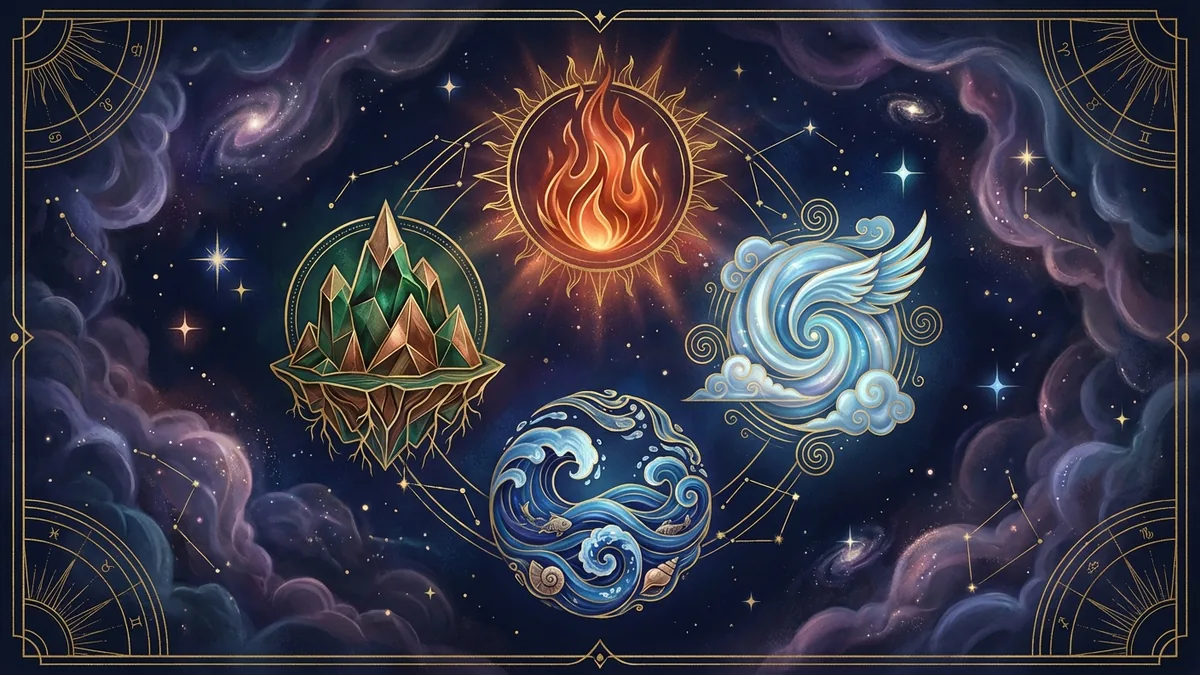
The four elements—fire, earth, air, and water—form the oldest classification system in Western astrology, predating even the zodiac signs themselves. Borrowed from ancient Greek philosophy, these elements describe fundamental energies that shape how we experience and interact with the world. Every zodiac sign belongs to one of these four elemental families, and understanding this framework gives you immediate insight into core personality patterns, compatibility dynamics, and the natural rhythm of any birth chart.
The elements aren't metaphors or vague spiritual concepts. They represent distinct modes of being and perceiving. Fire signs engage through action and vision. Earth signs process through the physical and practical. Air signs operate through thought and communication. Water signs navigate via emotion and intuition. When you know someone's elemental distribution—which elements dominate their chart and which are absent—you understand their fundamental operating system, the lens through which they interpret every experience.
This system matters because it reveals patterns that individual sign descriptions can't capture. A Sagittarius and an Aries may express fire energy differently, but they share the same initiating, enthusiastic, action-oriented approach to life. Similarly, someone with no water signs in their chart will struggle with emotional processing regardless of their sun sign. The elements give you the foundational architecture beneath the more detailed zodiac symbolism.
How It Works
Each element governs three zodiac signs in what astrologers call a triplicity. Fire rules Aries, Leo, and Sagittarius. Earth governs Taurus, Virgo, and Capricorn. Air commands Gemini, Libra, and Aquarius. Water flows through Cancer, Scorpio, and Pisces. These groupings aren't arbitrary—they follow a developmental sequence through the zodiac, with each element appearing first in a cardinal sign (initiating action), then a fixed sign (sustaining energy), and finally a mutable sign (adapting and transitioning).
The traditional qualities assigned to each element come from observable patterns in human temperament. Fire signs share warmth, spontaneity, and a future-oriented optimism. They're energized by possibility and meaning, often acting before thinking. Earth signs exhibit practicality, patience, and present-moment awareness. They trust what's tangible and build security through consistent effort. Air signs demonstrate objectivity, social awareness, and mental agility. They process experience through analysis and need intellectual stimulation and variety. Water signs show emotional depth, sensitivity, and psychic receptivity. They absorb their environment and navigate through feeling rather than logic.
These elements also interact through compatibility principles. Signs of the same element understand each other instinctively—they operate on the same wavelength. Fire and air combine well because air feeds fire (ideas fuel action). Earth and water harmonize because water nourishes earth (emotion grounds in form). The challenging combinations—fire and water (steam and hissing), earth and air (dust storms and disconnection)—create friction that can lead to growth or frustration depending on other chart factors.
In chart analysis, you assess elemental balance by counting how many planets fall in each element. A person with five planets in water signs will experience life primarily through emotional resonance, while someone with no fire might struggle with self-assertion and enthusiasm. This distribution shapes everything from career choices to relationship needs. The missing elements often indicate areas of life that feel foreign or underdeveloped, while overloaded elements can create imbalance—too much fire burns out, excessive water drowns in feeling, abundant air detaches from body and emotion, and heavy earth resists change.
Examples in Action
Consider someone born with Sun in Gemini, Moon in Libra, and Ascendant in Aquarius—all three personal points in air signs. This person processes everything intellectually first. When facing a breakup, they'll want to talk it through, understand the reasons, and maintain friendly communication. They'll struggle with the raw grief stage that a water-dominant person would navigate naturally. At work, they excel in roles requiring communication, networking, or strategic thinking, but might find purely physical or emotionally intensive jobs draining. Their relationships thrive with partners who can engage in lengthy conversations and respect their need for mental space. The challenge? Learning that not everything can be solved through discussion, and that emotions sometimes need to be felt rather than analyzed.
Contrast this with someone whose chart emphasizes earth: Sun in Taurus, Moon in Capricorn, Mars in Virgo. This person builds security through tangible achievement. They show love through practical acts—fixing things, cooking meals, managing finances. When stressed, they work harder or organize their physical space. They're remarkably reliable but may dismiss ideas that seem impractical or emotional responses that lack clear solutions. In relationships, they need partners who appreciate consistency over spontaneity and understand that their way of caring involves doing rather than discussing feelings. Their growth edge involves trusting the intangible—inspiration, emotional intuition, theoretical possibilities—without demanding immediate practical application.
A balanced chart might show two planets in each element. This person can access different modes depending on the situation—thinking clearly when analysis helps, feeling deeply when empathy matters, taking action when initiative serves, and working steadily when persistence pays off. The challenge here isn't absence but integration: learning when to deploy which elemental energy. They might overthink emotional situations (air interfering with water) or start projects without planning (fire overwhelming earth). The work involves recognizing which element each situation truly requires rather than defaulting to habitual patterns.